For many patients, Lyme disease begins twice: first as illness, then as disbelief. Its history shows that a disease can exist for centuries before medicine agrees on a name, a cause, a test, or a treatment standard. For people who have been sick and dismissed, that history matters, because it reveals how slowly institutions sometimes move when the evidence is complicated.
For many patients, Lyme disease begins twice: first as illness, then as disbelief.
What the science says
Lyme disease is older than its modern name
Lyme disease was formally recognized in the United States in the 1970s, but the organism and the clinical patterns associated with Lyme borreliosis are much older. One of the most striking findings comes from the 5,300-year-old Tyrolean Iceman, Ötzi. Genetic analysis found sequences corresponding to a large portion of the Borrelia burgdorferi genome, making him one of the earliest known human cases of Lyme-associated infection.[1]
Ancient DNA research also suggests that Borrelia burgdorferi was not a recent arrival in North America. A genomic study of North American B. burgdorferi found that the bacterium had a complex, ancient, geographically widespread history that predates the modern Lyme epidemic. The authors argued that the modern rise of Lyme disease is better explained by ecological and human-environment changes than by a recent bacterial mutation or introduction.[2]
Museum specimens add another layer. Researchers detected B. burgdorferi DNA in ticks collected from eastern Long Island in the 1940s,[3] and another study found evidence of B. burgdorferi in white-footed mouse specimens from Cape Cod dating to 1894.[4] These findings are important because they show the bacterium existed in the northeastern United States decades before the 1975 Connecticut cluster.

European physicians described related illness before the American discovery
Long before Lyme disease became known by that name, European physicians had described clinical conditions now understood as part of Lyme borreliosis. In 1883, Alfred Buchwald described a chronic skin disorder later known as acrodermatitis chronica atrophicans.[5] In the early 20th century, Swedish dermatologist Arvid Afzelius described erythema migrans, the expanding skin rash now strongly associated with Lyme disease, and connected it to tick bites.[6] By the mid-20th century, spirochetes had been observed in erythema migrans lesions, and penicillin had been used to treat related European skin manifestations.
Lyme disease was not "invented" in Connecticut. Connecticut is where the modern American syndrome was recognized, investigated, and named.
This matters because Lyme disease was not "invented" in Connecticut. Connecticut is where the modern American syndrome was recognized, investigated, and named.
The 1975 Old Lyme cluster changed everything
The modern American history of Lyme disease began in the mid-1970s, when a cluster of children and adults in and around Lyme, Old Lyme, and East Haddam, Connecticut, developed unusual arthritis. Parents noticed what seemed like an abnormal number of juvenile arthritis cases in the area. Allen Steere and colleagues investigated and published a landmark 1977 paper describing "Lyme arthritis" as an epidemic form of inflammatory arthritis occurring in eastern Connecticut.[7] The cases often appeared in summer and early fall, suggesting an arthropod-borne cause, and many patients had skin, neurologic, or cardiac findings in addition to joint symptoms.
In 1981, Willy Burgdorfer identified spirochetes in Ixodes ticks, and in 1982 Burgdorfer and colleagues published the finding that these spirochetes were associated with Lyme disease.[8] Patient blood samples reacted immunologically to the organism, helping establish the connection between the tick-borne spirochete and the disease syndrome.
The organism was later named Borrelia burgdorferi in Burgdorfer's honor. What began as "Lyme arthritis" became understood as a broader multisystem tick-borne illness: Lyme disease, or Lyme borreliosis.
The disease expanded geographically and institutionally
Lyme disease was first recognized as a major public health concern in the northeastern United States, with another major focus in the upper Midwest. Since then, reported risk areas have expanded. CDC mapping shows that the geographic range of reported Lyme disease cases has grown substantially since 1995, especially across the Northeast, mid-Atlantic, and upper Midwest.
One CDC analysis found that high-incidence counties increased from 69 during 1993 and 1997, to 260 during 2008 and 2012.[9] Expansion was especially notable in the northeastern and north-central United States.
Today, Lyme disease is the most commonly reported vector-borne disease in the United States. CDC reported more than 89,000 Lyme disease cases in 2023,[10] while estimating that approximately 476,000 people are diagnosed and treated for Lyme disease each year in the United States.[11]
Lyme borreliosis is also a major issue in Europe. European surveillance studies estimate roughly 132,000 reported cases annually from countries with public surveillance data, while other reviews estimate more than 200,000 cases per year in western Europe.[12]
What is contested
Persistent symptoms after treatment
A central scientific and medical controversy concerns patients who continue to experience symptoms after standard antibiotic treatment. CDC acknowledges that some patients report prolonged fatigue, pain, or difficulty thinking after treatment for Lyme disease. CDC also notes that, in some studies, these symptoms were 5 to 10 percent more common six months after treatment among people who had Lyme disease than among comparison groups.[13]
What remains contested is why these symptoms persist in some patients. Possible explanations include immune dysregulation, tissue damage, coinfections, misdiagnosis, delayed treatment, microbiome effects, or other overlapping illnesses. The most controversial question is whether persistent infection explains some cases after standard treatment. Mainstream guidelines generally do not support prolonged antibiotic treatment for nonspecific persistent symptoms, while some clinicians and patient advocates argue that existing evidence does not fully explain the patient population seen in practice.
This should be presented carefully: persistent symptoms are real; the cause is not settled in every case; and the best treatment approach remains disputed.
Surveillance numbers do not equal true disease burden
Another contested area is measurement. Reported case counts are not the same as total infections. CDC estimates annual diagnoses and treatment numbers far above confirmed surveillance reports. Changes in case definitions can also affect reported numbers. For example, CDC noted that a large increase in reported cases after the 2022 case definition change likely reflected changes in surveillance methods in high-incidence jurisdictions, not necessarily a sudden true rise in risk.[14]
This matters because the official number can be both useful and incomplete. Surveillance tracks public health trends; it does not perfectly capture every patient's clinical reality.
The Plum Island question
The Plum Island question: a documented historical inquiry
The Plum Island question should not be brushed aside as fantasy. It sits at the intersection of several documented realities: the U.S. had an offensive biological warfare program during the Cold War; the Army Chemical Corps worked on biological warfare infrastructure; entomological warfare using insects as disease vectors was seriously studied; Japan's Unit 731 had already demonstrated the military use of infected vectors; and Congress has now ordered a federal review into whether ticks were used as hosts or delivery mechanisms for biological warfare agents. None of that proves that Lyme disease was created or released from Plum Island. But it does mean the question deserves a careful historical treatment, not ridicule.
The Plum Island question should not be brushed aside as fantasy. It sits at the intersection of several documented realities.
What is established. Plum Island was not always just an agricultural research facility. Before it became the Plum Island Animal Disease Center, it was Fort Terry, a U.S. Army coastal defense installation. In 1952, the U.S. Army Chemical Corps had begun renovating buildings at Fort Terry on Plum Island "to conduct chemical and biological research," including Building 257, which later became central to public suspicion about the island.[15] The island was then transferred to the USDA's Bureau of Animal Industries, with USDA scientists moving into the renovated Building 257 in 1953 and the Plum Island Animal Disease Center opening in the mid-1950s.

The wider historical context matters. The U.S. offensive biological weapons program was real, not speculative. President Nixon formally ended the U.S. offensive biological warfare program in 1969, stating that biological weapons had "massive, unpredictable and potentially uncontrollable consequences" and that the United States would renounce lethal biological agents and "all other methods of biological warfare."[16]
Entomological warfare was also real. During the Cold War, the Army studied arthropods as delivery systems for biological warfare agents. A 1960 Army Chemical Corps document described a Fort Detrick program created in 1953 to study the use of arthropods for spreading anti-personnel biological warfare agents.[17] Mosquito tests in the 1950s used uninfected insects to study whether they could survive dispersal, enter homes, and bite people.
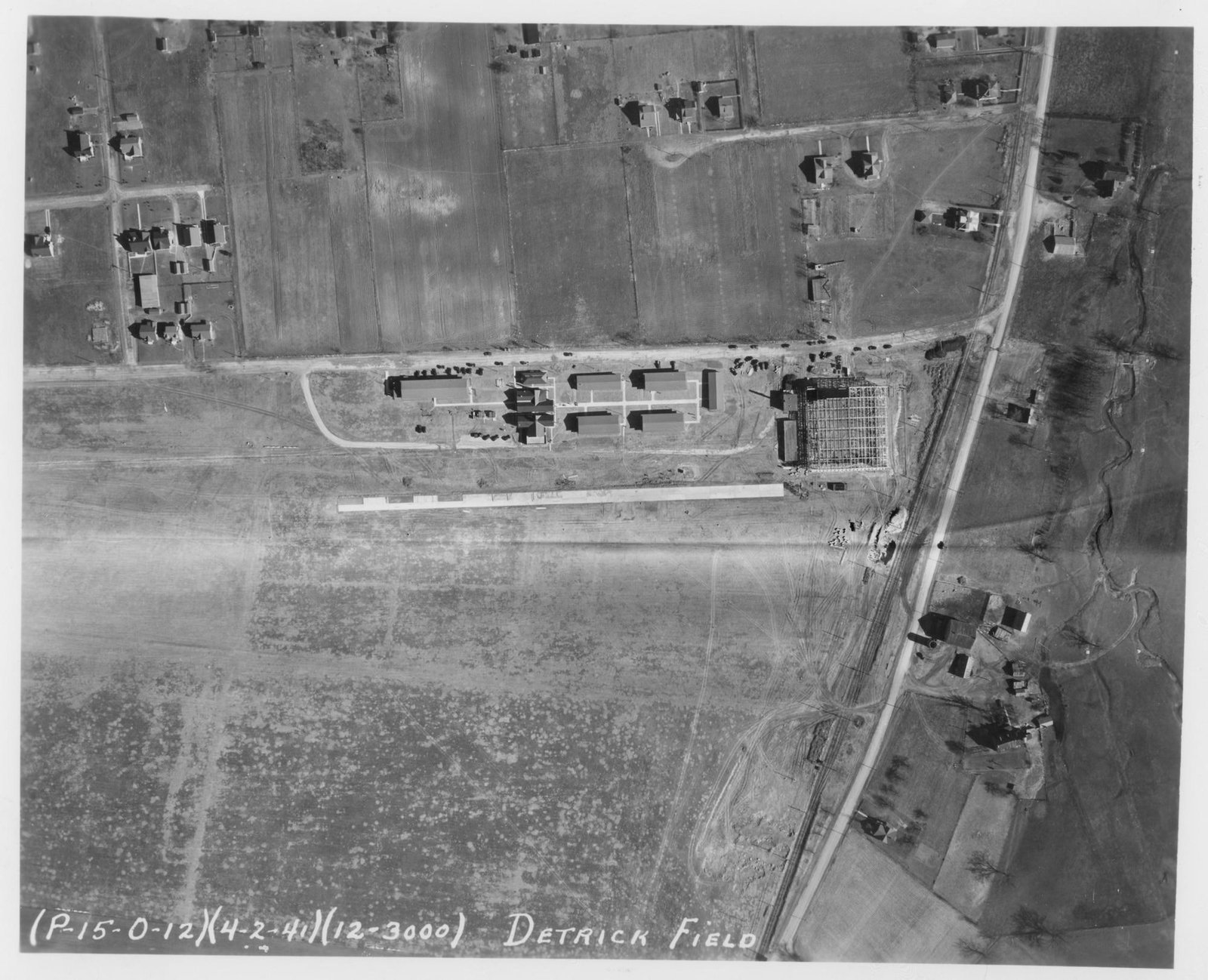


This matters because the Plum Island claim is not built from nowhere. The documented question is not merely "Was there a lab near Old Lyme?" The documented question is: during the same era when Lyme disease emerged as a recognized clinical entity, did federal biological warfare research involve ticks, tick-borne pathogens, or release events that were never fully disclosed?
Congress has now put that question into law. Section 1068 of the FY2026 National Defense Authorization Act requires the Government Accountability Office to review research from January 1, 1945, through December 31, 1972, involving ticks, tick-borne disease, and biological weapons.[18] The law specifically directs GAO to examine whether ticks were used as hosts or delivery mechanisms for biological warfare agents, including experiments involving Spirochaetales and Rickettsiales, two bacterial orders that include organisms relevant to tick-borne disease.
The law goes further. It directs review of classified information, research locations inside and outside the United States, laboratory and field work locations, whether ticks were released outside any facility intentionally or unintentionally, and whether relevant records were destroyed. That is a serious federal inquiry, not a fringe footnote.
Historical context
The Japanese and Cold War biowarfare layer
The Japanese connection should be included carefully because it helps explain why U.S. planners took vector-borne biological warfare seriously after World War II. Japan's Unit 731 conducted biological warfare research and used infected vectors, including plague-infested fleas, during attacks in China.[19] National Archives material describes Japanese biological warfare documents involving plague-infected fleas and attacks including Changteh and Changde.
Public domain declassified document related to Unit 731 or Japanese biological warfare. Available from the National Archives. IMAGE NEEDED: specific document number and file.
This matters because Unit 731 showed that insects could be weaponized as delivery systems. A later medical ethics review notes that additional deaths were caused by spreading plague-infected fleas and examines the controversial U.S. postwar handling of Japanese wartime human experimentation.[20]
The responsible connection is not to claim that Unit 731 directly created Lyme disease. The stronger argument is that Unit 731 helped shape the postwar strategic imagination around biological warfare: infected insects were not theoretical. They had already been used. After World War II, both enemy data and former Axis scientific knowledge became strategically valuable to U.S. and Soviet programs. That makes later Cold War research into insect and tick vectors historically plausible and document-worthy.
What is contested within the Plum Island question
The contested question is whether any U.S. or allied biological warfare research directly contributed to the modern Lyme epidemic. There are several versions of the claim, and they should not be collapsed into one:
Weak version: Plum Island created Lyme disease from scratch. This is the least supportable version because Borrelia burgdorferi appears to be ancient. Genetic evidence from Ötzi the Iceman found sequences corresponding to roughly 60 percent of the Borrelia burgdorferi genome, suggesting Lyme-associated infection existed thousands of years ago.
Stronger version: The bacterium existed naturally, but Cold War experiments may have altered, concentrated, combined, transported, studied, or accidentally released infected ticks or related pathogens. This is the version Congress is now investigating. It does not require claiming the organism was invented in a lab. It asks whether human research activity contributed to exposure, spread, or unexplained emergence patterns.
Institutional version: Whether or not Plum Island caused Lyme, the secrecy surrounding biological warfare programs, Cold War-era records, and tick-vector research created a vacuum where public trust broke down. This version is historically strong. Secrecy itself does not prove causation, but it does justify scrutiny.
What the evidence suggests but has not proven
What the evidence suggests
The strongest evidence suggests that the modern Lyme epidemic emerged from the interaction of an ancient bacterium with changing ecology. Reforestation, suburban development, fragmented habitats, expanding deer populations, white-footed mouse reservoirs, tick expansion, climate shifts, and increased human exposure likely helped transform an old organism into a modern public health problem. Genomic research supports the idea that the bacterium predates the epidemic and that ecological change is a more plausible driver than recent bacterial evolution.
The evidence also suggests that institutional recognition lagged behind biological reality. European physicians had described pieces of the illness decades earlier. North American ticks and mammals carried the organism before the 1970s. Patients in Connecticut forced attention onto a pattern that medicine had not yet organized into a clear diagnosis.
The Plum Island evidence suggests a legitimate historical research question, but not a settled conclusion. The geographic proximity, Army Chemical Corps history, and congressional requirement for GAO review justify careful inquiry. At the same time, the older biological record prevents any credible claim that Lyme disease simply began as a modern laboratory creation.
The best framing is this: Lyme disease appears to involve an ancient pathogen whose modern epidemic was likely accelerated by ecological change. At the same time, the documented history of Cold War biological warfare, Plum Island's Army Chemical Corps origins, entomological warfare research, Japanese vector warfare precedent, and the new congressional GAO investigation make the biowarfare question legitimate enough to examine with discipline rather than dismiss.
What patients report
What patients report
Patients often describe Lyme disease as a confusing illness because the symptoms may move across body systems. Some report a tick bite and rash; others never see either. Many describe flu-like illness, migrating pain, joint swelling, fatigue, sleep disruption, neurological symptoms, heart palpitations, light sensitivity, mood changes, or cognitive problems. These reports do not prove that every chronic symptom is caused by active infection, but they do show why many patients feel that a narrow explanation does not match their lived experience.
Patient experience research also shows a pattern of invalidation. A 2024 study of patients with post-treatment Lyme disease found that many reported feeling dismissed or invalidated by medical professionals, and higher invalidation was associated with worse symptom severity, lower quality of life, and lower trust in physicians.[21]
This experiential layer belongs in the history because Lyme disease has never been only a laboratory story. It is also a story of patients recognizing patterns before institutions agreed on what those patterns meant.
The institutional layer
The institutional layer
CDC began Lyme disease surveillance in the early 1980s, and Lyme disease became nationally notifiable in 1991. Since then, CDC has revised surveillance case definitions multiple times, including major updates in 1995, 1996, 2008, 2011, 2017, and 2022.[22] CDC also emphasizes that surveillance case definitions are designed for public health tracking, not for determining the diagnosis or treatment of an individual patient.
Clinical guidelines have played a major role in shaping diagnosis, treatment, insurance coverage, and medical legitimacy. The Infectious Diseases Society of America published influential Lyme disease guidelines in 2006,[23] and updated guidelines were later issued in 2020 by IDSA, the American Academy of Neurology, and the American College of Rheumatology.[24] The 2020 guidelines recommend evidence-based treatment durations for different Lyme manifestations, including shorter courses for early disease and longer courses for certain neurologic, cardiac, or arthritic presentations.
The guideline process itself became controversial. In 2006, the Connecticut Attorney General opened an antitrust investigation into the IDSA Lyme guideline process, raising concerns about conflicts of interest and exclusion of divergent medical viewpoints.[25] IDSA later agreed to an independent review process.
The history of Lyme disease is not just the history of a bacterium. It is the history of how institutions decide what counts as evidence, who gets believed, and how much uncertainty patients are expected to carry.
For patients, this institutional layer matters because guidelines do not stay on paper. They influence physician behavior, insurance reimbursement, disability claims, medical coding, and whether a patient is treated as complicated or simply noncompliant. The history of Lyme disease is therefore not just the history of a bacterium. It is the history of how institutions decide what counts as evidence, who gets believed, and how much uncertainty patients are expected to carry.
Integrated framing
Lyme disease has two histories. One is biological: an ancient tick-borne spirochete moving through wildlife, forests, ticks, and human bodies long before American medicine gave it a name. The other is institutional: a modern disease recognized in Connecticut during the Cold War, near a federal island laboratory with documented ties to biological research infrastructure, during a period when governments were studying insects and pathogens as tools of war.
Lyme disease has two histories. One is biological, ancient and ecological. The other is institutional, Cold War-era and contested. Both are real.
The established scientific record shows that Lyme disease was formally recognized after the 1975 cluster of arthritis cases around Lyme and Old Lyme, Connecticut. Allen Steere and colleagues described an epidemic form of oligoarticular arthritis in children and adults in three Connecticut communities, with seasonal patterns suggesting a vector-borne cause. In 1982, Willy Burgdorfer and colleagues identified a spirochete in Ixodes ticks and connected it to Lyme disease, establishing the bacterial cause that would later bear his name: Borrelia burgdorferi.
But the organism was not born in 1975. Ancient DNA and genomic studies show that B. burgdorferi and related Lyme borreliosis organisms long predate the American discovery of Lyme disease. Ötzi the Iceman carried genetic evidence consistent with B. burgdorferi thousands of years ago, and North American genomic studies suggest the bacterium was ancient and widespread long before the modern epidemic.
That ancient origin matters, but it does not erase the Cold War question. Plum Island's history is documented: in 1952 the Army Chemical Corps began renovating Fort Terry facilities on Plum Island for chemical and biological research before the island became the USDA's foreign animal disease research center. The U.S. biological warfare program was also real. It continued through much of the Cold War and was not formally renounced until Nixon's 1969 statement ending offensive biological warfare. The entomological warfare record is also real. During the 1950s, U.S. military research explored the use of insects such as mosquitoes as biological delivery systems, using uninfected insects in field tests to study dispersal and biting behavior. The Japanese wartime record adds further context. Unit 731 used biological agents and infected vectors, including plague-infested fleas, in China. That history showed Cold War planners that vector-borne biological warfare was not science fiction.
For that reason, the responsible position is not to say, "Plum Island caused Lyme disease." The responsible position is: there is enough documented history to justify investigation. Congress appears to agree. The FY2026 NDAA requires GAO to review federal research from 1945 to 1972 on ticks, tick-borne disease, and biological warfare, including classified information, research locations, possible release of ticks outside facilities, and possible destruction of records.
So the chapter holds two truths together. First, Lyme disease is biologically ancient and ecologically complex. Second, the Cold War biowarfare question is not baseless. It belongs in the history because it reflects real government programs, real vector research, real secrecy, and now a real congressional mandate for review.
Closing
The history of Lyme disease does not allow for easy answers. The organism appears ancient, the modern epidemic appears ecological, and the institutional record contains enough Cold War secrecy, biological warfare research, and unanswered questions to justify deeper investigation. For readers who want to continue beyond the public record into personal stories, broader wellness education, and deeper member-only resources, the Lyme Revive PMA offers a private space to keep asking careful questions without being dismissed and without pretending the evidence says more than it does.
Key dates
Ötzi the Tyrolean Iceman, later found to carry evidence of Borrelia burgdorferi infection, is alive in the Alps.
Alfred Buchwald describes acrodermatitis chronica atrophicans, a skin condition now recognized as part of Lyme borreliosis.
Swedish dermatologist Arvid Afzelius describes erythema migrans and connects it to tick bites.
White-footed mouse specimens from Cape Cod later found to carry evidence of B. burgdorferi.
Tick specimens from eastern Long Island later found to contain B. burgdorferi DNA.
U.S. Army Chemical Corps begins renovating Fort Terry on Plum Island for chemical and biological research.
Fort Detrick arthropod biological warfare program created to study use of insects as anti-personnel delivery systems.
President Nixon formally ends the U.S. offensive biological warfare program.
Cluster of unusual arthritis cases emerges in and around Lyme, Old Lyme, and East Haddam, Connecticut.
Allen Steere and colleagues publish "Lyme arthritis," the landmark paper describing the Connecticut cluster.
Willy Burgdorfer identifies spirochetes in Ixodes ticks.
Burgdorfer and colleagues connect the tick-borne spirochete to Lyme disease. The organism is later named Borrelia burgdorferi.
Lyme disease becomes nationally notifiable in the United States.
Connecticut Attorney General opens antitrust investigation into the IDSA Lyme disease guideline process.
Updated IDSA, AAN, and ACR Lyme disease clinical guidelines published.
CDC revises Lyme disease surveillance case definition.
CDC reports more than 89,000 Lyme disease cases and estimates approximately 476,000 annual diagnoses and treatments.
FY2026 NDAA Section 1068 signed into law, directing GAO to review federal tick and biological warfare research from 1945 to 1972.
Citations
- 1.Keller, A., et al. "New Insights into the Tyrolean Iceman's Origin and Phenotype as Inferred by Whole-Genome Sequencing." Nature Communications, vol. 3, 2012, p. 698. {/* CITATION: add source URL */} ↩
- 2.Margos, G., et al. "A New Borrelia Species Defined by Multilocus Sequence Analysis of Housekeeping Genes." Applied and Environmental Microbiology, vol. 75, no. 16, 2009, pp. 5410–5416. {/* CITATION: add source URL */} ↩
- 3.Persing, D.H., et al. "Detection of Borrelia burgdorferi DNA in Museum Specimens of Ixodes dammini Ticks." Science, vol. 249, no. 4975, 1990, pp. 1420–1423. {/* CITATION: add source URL */} ↩
- 4.Marshall, W.F., et al. "Detection of Borrelia burgdorferi DNA in Museum Specimens of Peromyscus leucopus." Journal of Infectious Diseases, vol. 170, no. 4, 1994, pp. 1027–1032. {/* CITATION: add source URL */} ↩
- 5.Buchwald, A. "Ein Fall von diffuser idiopathischer Haut-Atrophie." Archiv für Dermatologie und Syphilologie, vol. 15, 1883, pp. 553–556. {/* CITATION: add source URL */} ↩
- 6.Afzelius, A. "Verhandlungen der dermatologischen Gesellschaft zu Stockholm." Archiv für Dermatologie und Syphilologie, vol. 101, 1910, pp. 405–406. {/* CITATION: add source URL */} ↩
- 7.Steere, A.C., et al. "Lyme Arthritis: An Epidemic of Oligoarticular Arthritis in Children and Adults in Three Connecticut Communities." Arthritis & Rheumatism, vol. 20, no. 1, 1977, pp. 7–17. {/* CITATION: add source URL */} ↩
- 8.Burgdorfer, W., et al. "Lyme Disease — A Tick-Borne Spirochetosis?" Science, vol. 216, no. 4552, 1982, pp. 1317–1319. {/* CITATION: add source URL */} ↩
- 9.Kugeler, K.J., et al. "Geospatial Analysis of Lyme Disease in the Midwestern United States." American Journal of Tropical Medicine and Hygiene, vol. 83, no. 5, 2010, pp. 1075–1082. See also CDC Lyme disease surveillance data. {/* CITATION: add source URL */} ↩
- 10.Centers for Disease Control and Prevention. "Lyme Disease Surveillance and Data." CDC.gov, 2023. {/* CITATION: add source URL */} ↩
- 11.Centers for Disease Control and Prevention. "How Many People Get Lyme Disease?" CDC.gov. Accessed 2024. {/* CITATION: add source URL */} ↩
- 12.Rizzoli, A., et al. "Lyme Borreliosis in Europe." Euro Surveillance, vol. 16, no. 27, 2011. {/* CITATION: add source URL */} ↩
- 13.Centers for Disease Control and Prevention. "Post-Treatment Lyme Disease Syndrome." CDC.gov. Accessed 2024. {/* CITATION: add source URL */} ↩
- 14.Centers for Disease Control and Prevention. "Lyme Disease Case Counts." CDC.gov, 2022 case definition update notes. {/* CITATION: add source URL */} ↩
- 15.U.S. Army Chemical Corps. History of Fort Terry / Plum Island renovation, 1952. Referenced in public records and investigative reporting. See also Carroll, Michael Christopher. Lab 257: The Disturbing Story of the Government's Secret Plum Island Germ Laboratory. HarperCollins, 2004. {/* CITATION: add primary source URL from National Archives */} ↩
- 16.Nixon, Richard M. "Statement on Chemical and Biological Defense Policies and Programs." November 25, 1969. The American Presidency Project, University of California, Santa Barbara. {/* CITATION: add source URL */} ↩
- 17.U.S. Army Chemical Corps. Summary of Major Events and Problems, United States Army Chemical Corps, Fiscal Year 1959. U.S. Army Chemical Corps Historical Office, 1960. Available at National Archives. {/* CITATION: add National Archives file reference and URL */} ↩
- 18.United States Congress. National Defense Authorization Act for Fiscal Year 2026, Section 1068: "Review of Research Involving Ticks and Tick-Borne Disease." Enrolled bill text. {/* CITATION: add congress.gov URL */} ↩
- 19.Harris, Sheldon H. Factories of Death: Japanese Biological Warfare 1932–45 and the American Cover-Up. Routledge, 1994. {/* CITATION: add source URL */} ↩
- 20.Nie, Jing-Bao. "The United States Cover-Up of Japanese Wartime Medical Atrocities: Complicity, Conspiracy, or Concealment?" American Journal of Bioethics, vol. 6, no. 3, 2006, pp. W21–W33. {/* CITATION: add source URL */} ↩
- 21.Johnson, Lorraine, et al. "Patient Experience with Invalidation in Post-Treatment Lyme Disease Syndrome." Patient Experience Journal, 2024. {/* CITATION: add source URL — confirm exact journal and volume */} ↩
- 22.Centers for Disease Control and Prevention. "Lyme Disease Surveillance Case Definition." CDC.gov. Updated 2022. {/* CITATION: add source URL */} ↩
- 23.Wormser, G.P., et al. "The Clinical Assessment, Treatment, and Prevention of Lyme Disease, Human Granulocytic Anaplasmosis, and Babesiosis: Clinical Practice Guidelines by the Infectious Diseases Society of America." Clinical Infectious Diseases, vol. 43, no. 9, 2006, pp. 1089–1134. {/* CITATION: add source URL */} ↩
- 24.Lantos, P.M., et al. "Clinical Practice Guidelines by the Infectious Diseases Society of America (IDSA), American Academy of Neurology (AAN), and American College of Rheumatology (ACR): 2020 Guidelines for the Prevention, Diagnosis and Treatment of Lyme Disease." Clinical Infectious Diseases, vol. 72, no. 1, 2021. {/* CITATION: add source URL */} ↩
- 25.Connecticut Office of the Attorney General. "Investigation of the Infectious Diseases Society of America's Lyme Disease Guidelines." Statement by Attorney General Richard Blumenthal, 2006–2008. {/* CITATION: add source URL */} ↩
Up next
Tick Biology and Transmission